By Aliyu Mohammed Idris, PhD,
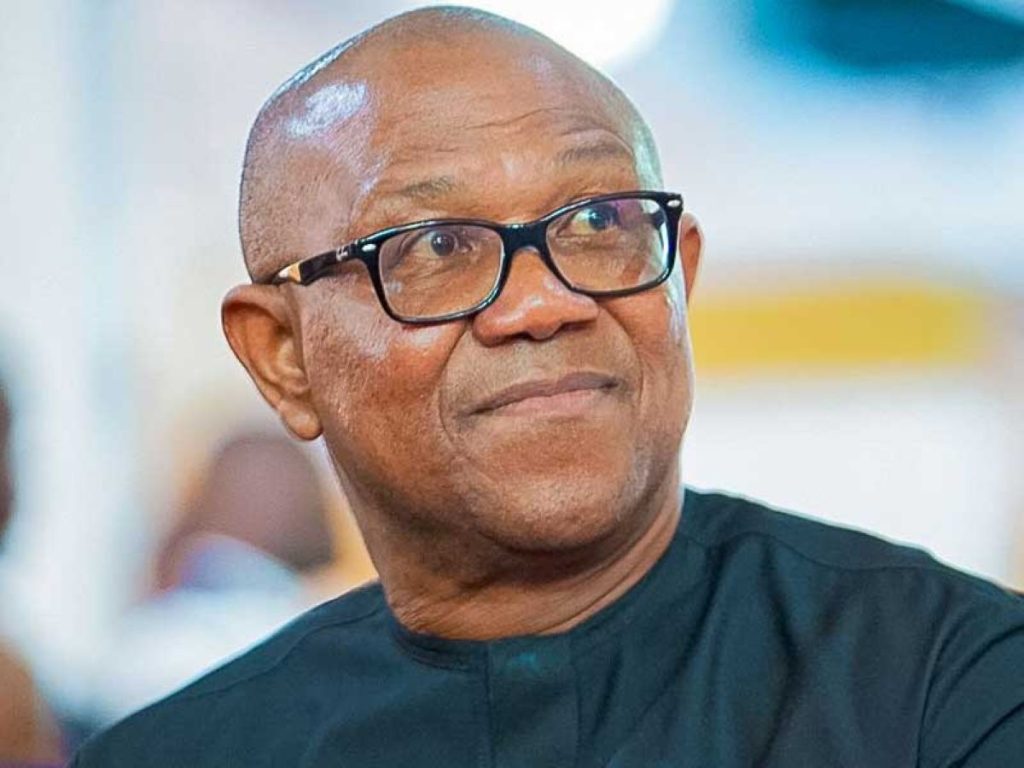
There is a particular kind of political optimism that refuses to be corrected by evidence. It is the optimism that survives a catastrophic electoral performance, reinterprets the catastrophe as a near-miss, constructs an elaborate narrative of stolen victory to explain away the margin of defeat, and then proceeds to the next electoral cycle with essentially the same strategic assumptions, the same candidate, and the same fundamental misreading of the political landscape that produced the catastrophe in the first place. It is the optimism currently driving Peter Obi’s 2027 presidential campaign under the banner of the Nigeria Democratic Congress, and it is an optimism that the verified electoral arithmetic of the 2023 presidential election exposes, with the cold and irrefutable precision of numbers, as a strategy built on a foundation that the facts of Nigerian political geography simply do not support.
The numbers are not in dispute. They are drawn from the official records of the Independent National Electoral Commission, verified by multiple fact-checking organisations, and confirmed by the Africa Report’s real-time election coverage. Peter Obi secured 43.0 percent of votes from the South in the 2023 presidential election and only 14.2 percent from the North. That 14.2 percent figure is not merely a disappointing performance or a correctable underachievement.
It is a structural indictment of a campaign that presented itself as a genuinely national movement while failing to build anything resembling a genuinely national electoral coalition. In Gombe State, he polled 26,160 votes against Atiku’s 319,123. In Sokoto, he managed 6,568 votes. In state after state across the North-West and North-East, his performance was so marginal as to be politically irrelevant in the context of a contest governed by the constitutional requirement that a winning presidential candidate must secure not merely the most votes nationally but at least 25 percent of votes cast in no fewer than 24 of Nigeria’s 36 states and the Federal Capital Territory.
The constitutional arithmetic is the most devastating dimension of this electoral reality.
Nigeria’s presidential election is not won by national popular vote alone. It is won by a combination of national plurality and geographic distribution, a system specifically designed to ensure that the president of a federation as diverse as Nigeria cannot be elected on the strength of a single region’s enthusiasm, however overwhelming that enthusiasm may be. In 2023, Peter Obi won the South-East with majorities that were, in several states, greater than 90 percent of votes cast. In Anambra, his home state, he polled 584,621 votes. In Enugu, he secured 91.42 percent of total votes cast. These were extraordinary performances. But they were extraordinary performances in a geographically concentrated region that, however impressive its margins, could not on its own satisfy the constitutional distribution requirement that makes a presidential victory mathematically possible.
The 25 percent threshold in 24 states is not a formality. It is the architectural expression of Nigeria’s federal character, and Peter Obi’s 2023 campaign failed to meet it not because of electoral malpractice alone, as his supporters persistently claim, but because the underlying electoral coalition he had built was geographically insufficient to satisfy a constitutional standard that any serious presidential campaign must plan from the outset to meet.
The question for 2027 is whether the Obi-Kwankwaso ticket has credibly addressed this structural deficiency. The honest answer, when examined against the current political landscape of Northern Nigeria, is that it has not, and that the specific political assets that Kwankwaso was expected to bring to the ticket have been substantially eroded by the events of the past two years in ways that the NDC’s campaign strategists appear to be either unaware of or unwilling to acknowledge.
Kwankwaso’s political capital in the North was always most concentrated in Kano State, where the Kwankwasiyya movement had built a formidable grassroots organisation over more than a decade of investment in community mobilisation, welfare distribution, and political education.
That organisation delivered Kano State for the NNPP in the 2023 governorship election, producing the administration of Governor Abba Kabir Yusuf, the man who was supposed to be the institutional expression of Kwankwaso’s continued relevance as a northern political force.
But Governor Yusuf is no longer Kwankwaso’s man. He decamped to the APC earlier in 2026, taking with him the 36 members of the Kano State House of Assembly and all 44 local government chairmen, in one of the most consequential political defections in Kano’s recent history. The Kwankwasiyya movement, which was already showing signs of internal stress before the defection, has been structurally fractured by the departure of the governor it helped elect.
The political organisation that Kwankwaso was counting on to deliver Kano’s substantial electoral weight to the Obi-Kwankwaso ticket in 2027 is now a significantly diminished force operating in a state whose government, whose legislative machinery, and whose local government structures are all aligned with the APC and the federal administration of President Tinubu. Beyond Kano, Kwankwaso’s influence across the wider North-West and North-East was always more aspirational than organisational, more a function of his national profile than of the kind of ward-level mobilisation infrastructure that actually moves voters on election day.
The one-term promise that Obi has repeatedly deployed as a tool for managing northern political anxieties about southern presidential dominance adds a further layer of analytical complexity to the electoral arithmetic question, because it highlights the extent to which the NDC’s northern strategy is built on political arrangements rather than genuine political support.
A presidential candidate who needs to offer a constitutionally unenforceable promise to serve only a single term in order to persuade northern stakeholders to consider supporting him is a candidate who is acknowledging, in the most direct possible terms, that the northern support he is seeking is contingent rather than organic, transactional rather than ideological, and dependent on political calculations that could shift dramatically between now and the February 2027 polling date.
Political opinion across Northern Nigeria, as Vanguard’s reporting confirmed, remains sharply divided over the one-term promise, with many stakeholders describing it as politically strategic but lacking enforceable guarantees. That assessment is correct. And a northern electoral strategy built on a promise that cannot be legally enforced, delivered by a candidate whose history of party-switching has demonstrated a consistent willingness to abandon commitments when political conditions become inconvenient, is a strategy whose foundations deserve the most rigorous scrutiny.
The electoral mathematics of 2027 are not fundamentally different from those of 2023. The constitutional threshold is the same. The geographic distribution requirement is the same. The northern political landscape, far from having been transformed in Obi’s favour by the Kwankwaso alliance, has in critical respects shifted against him, with Kano State, the single most important northern electoral prize, now firmly within the APC’s political architecture following Governor Yusuf’s defection. The 14.2 percent that Obi secured from the North in 2023 was not a floor from which he will inevitably rise with the right running mate and the right messaging.
It was a ceiling built by a combination of the IPOB credibility deficit, the geographic concentration of the Obidient Movement’s energy, the constitutional distribution requirement’s structural demands, and the deep cultural and political instincts of northern voters whose relationship with presidential candidates is governed by a set of expectations and requirements that Peter Obi’s campaign, in 2023 and so far in 2027, has not demonstrated the capacity or the willingness to genuinely meet. The numbers said it clearly in 2023. They are saying it still.
The question is whether anyone in the NDC’s campaign structure is listening